Skating Injuries Prevention and Safe Recovery

A small fall can feel dramatic when you or your child is new to inline skating. Most skating injuries are preventable, and many are minor when skaters wear the right gear, learn how to fall, and progress at a sensible pace. The goal is not to make skating feel risky. It is to build the habits that let beginners enjoy the sport with confidence.
For parents, that starts with knowing what is normal. A scraped knee or a sore wrist after a fall may happen, especially during early lessons. A severe impact, persistent pain, or a suspected head injury needs a more cautious response. Good coaching helps learners recognize the difference while giving them practical skills to reduce falls in the first place.
Common Skating Injuries and Why They Happen
The most common inline skating injuries involve the wrists, hands, knees, elbows, ankles, and tailbone. Beginners often reach out with their hands when they lose balance, which can lead to sprains, scrapes, or wrist fractures if the impact is hard. Knee and elbow injuries are usually abrasions or bruises, while ankle discomfort can occur when skates fit poorly or a skater lacks the strength to hold a stable position.
Head injuries are less common when skaters wear helmets, but they require the most serious attention. A helmet does not make a high-speed collision harmless. It is one layer of protection, alongside controlled speed, awareness of the skating area, and the ability to stop.
Many incidents happen for predictable reasons: skaters move faster than their control allows, practice on uneven ground, wear loose skates, or attempt turns and slopes before learning balance and braking. Children may also become distracted by friends or excited to keep up with more experienced skaters. Adults can make the opposite mistake, feeling self-conscious and stiffening their bodies instead of practicing a relaxed, low stance.
Neither group needs to avoid skating. They need a structured starting point that matches their current ability.
Preventing Skating Injuries Before the First Push
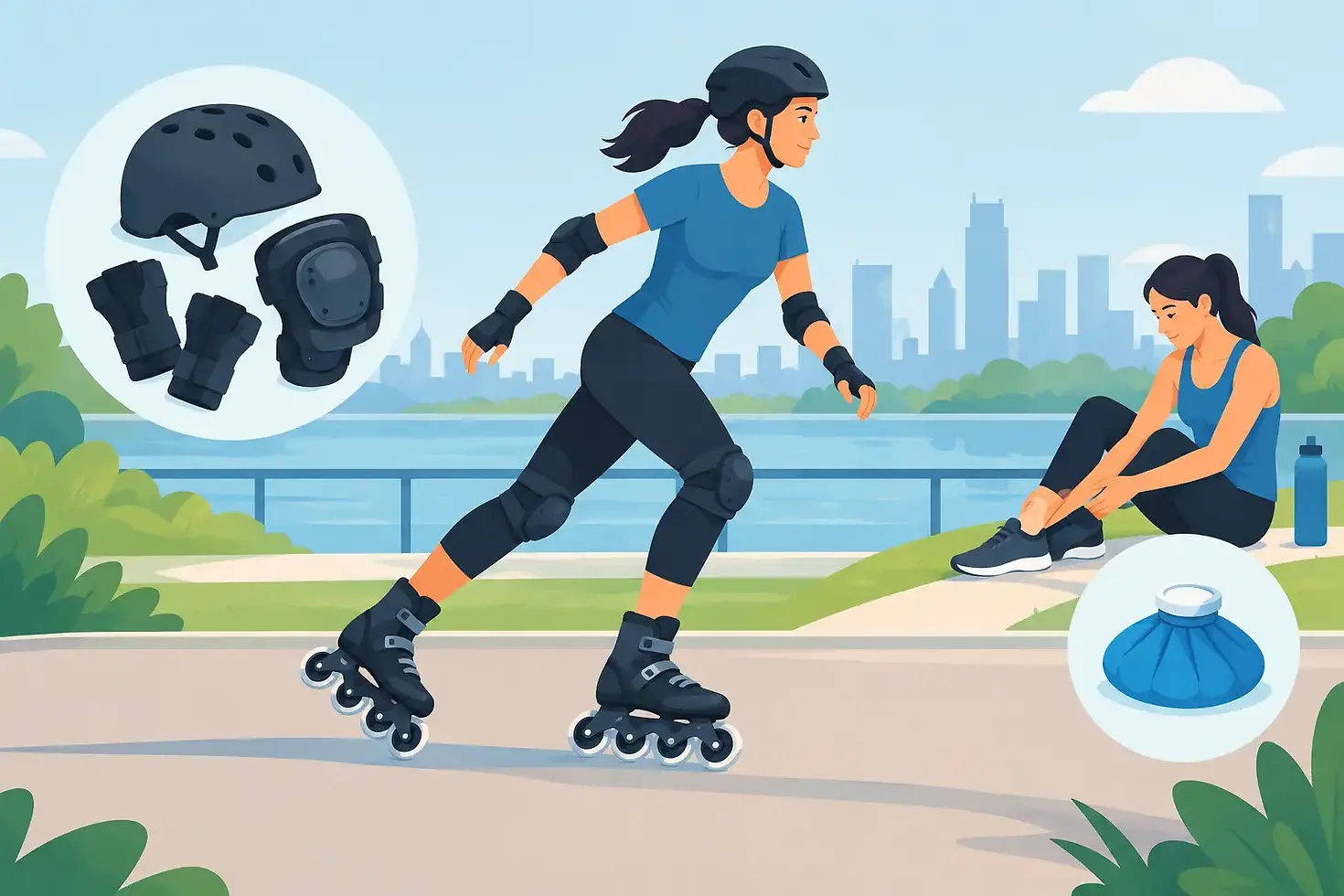
Protection begins before wheels touch the ground. A properly fitted helmet, wrist guards, knee pads, and elbow pads should be standard equipment for every beginner, and they remain a smart choice as skills develop. Gear should fit snugly without cutting off circulation or slipping during movement. A loose knee pad that slides aside in a fall offers little protection.
Skates matter just as much. The heel should sit firmly at the back of the boot, with toes comfortable but not swimming in extra space. A skate that is too large makes ankle control difficult. One that is too tight can cause numbness and pain. Secure the laces, buckles, or straps before every session, and check that wheels and brakes are not worn or loose.
The surface also changes the level of risk. Smooth, dry, open pavement is best for learning. Avoid wet paths, loose gravel, crowded walkways, steep slopes, and areas with frequent road crossings. In Singapore's warm weather, a hot or rainy day can affect both comfort and surface conditions. A quick check for rain, puddles, and slippery leaves is worth making before a session.
For young children, adults should stay close enough to supervise but avoid pulling them along by the hands. Holding a child's hand can interfere with natural balance and may increase the chance of an awkward fall. A coach can teach safe support methods while helping children become independent step by step.
Learn to Fall Before Learning to Go Fast
It may sound unusual, but one of the most valuable beginner skills is a controlled fall. Skaters who know what to do when balance goes wrong are less likely to panic, lock their knees, or throw their arms out straight.
A safe falling technique starts with a low skating stance: knees bent, chest slightly forward, and hands held in front of the body. When a fall is unavoidable, the skater should aim to go forward onto protected knee pads and wrist guards rather than backward onto the tailbone or head. The chin stays tucked, and the arms remain bent rather than rigid.
After a fall, pause before standing. Check for pain, look around for other skaters, then rise carefully. Beginners can practice this sequence on a safe, level surface at low speed. It removes much of the fear around falling and builds real confidence faster than simply telling someone to be careful.
Stopping is the next safety skill. A skater who cannot stop reliably should not be practicing speed, steep paths, or busy areas. Start with basic brake use, controlled turns, and slowing techniques under instruction. More advanced stops can come later, once balance and edge control are consistent.
When a Fall Needs First Aid or Medical Care
Most minor scrapes can be handled by stopping the activity, cleaning the wound with clean water, applying appropriate first aid, and covering it if needed. Rest, ice wrapped in a cloth, gentle compression, and elevation can help with mild bruising or swelling. Do not skate through sharp pain simply because a child or adult wants to continue.
Seek urgent medical assessment after a fall if there is any concern about a head injury. Warning signs can appear immediately or later, so monitor the skater closely. Get medical help for:
Loss of consciousness, confusion, unusual drowsiness, or behavior changes
Repeated vomiting, worsening headache, seizure, or vision problems
Severe neck, back, wrist, ankle, or limb pain
A visible deformity, inability to bear weight, or persistent numbness
A deep wound, heavy bleeding, or bleeding that does not stop with firm pressure
If a concussion is suspected, the skater should not return that day. They need medical guidance before resuming sports, even if they say they feel better. Children in particular may be eager to return to play before they are ready.
Returning to Skating Without Rushing
Recovery depends on the injury. A small scrape may only require basic care and a short break, while a sprain, fracture, or concussion needs a plan from a qualified health professional. Pain is useful information. It is not a challenge to overcome by pushing harder.
When cleared to return, begin with short, easy sessions on smooth ground. Revisit stance, marching steps, gliding, turning, and stopping before adding speed or more demanding terrain. If swelling, instability, or pain returns, stop and seek advice rather than trying to adjust your technique through discomfort.
A gradual return can feel slow, especially for a child who was enjoying rapid progress. Yet it protects confidence. One calm, successful session is more valuable than a rushed return followed by another painful fall.
How Structured Coaching Reduces Risk
Beginners do not need to learn through trial and error alone. A progressive lesson structure teaches skills in the order they are needed: body position first, then balance, safe falling, movement, turning, and stopping. This sequence reduces the temptation to race ahead before control is ready.
Small-group attention is especially helpful for children who are cautious, energetic, or easily distracted. They receive clear corrections on posture and equipment while still enjoying games that make practice feel positive. Adults benefit too, particularly those returning to activity after years away from sports. A patient coach can break down movements without pressure or embarrassment.
At Affinity Skates, safety-led instruction is built into the learning process, not treated as a quick reminder at the start of class. Certified coaching and a clear progression help learners build the control that keeps skating enjoyable long after the first lesson.
The best protection is not fear of falling. It is the quiet confidence that comes from proper gear, good habits, and skills practiced one manageable step at a time.


Comments