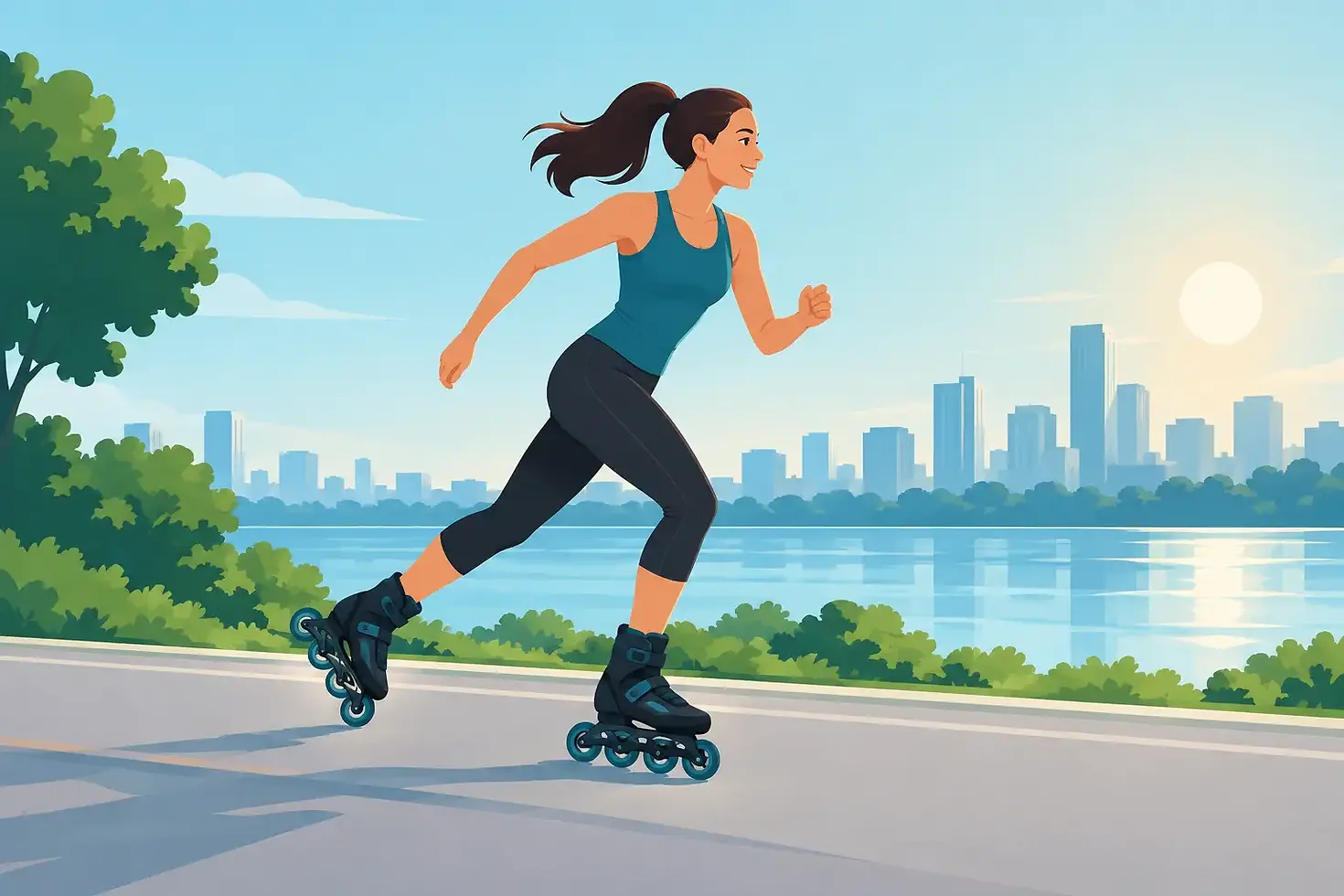
Skating Fitness for Stronger, Happier Bodies

A child who spends an hour learning to glide, stop, and turn is doing far more than having fun outdoors. They are building balance under pressure, strengthening their legs and core, and learning to get back up after a wobble. That is the real value of skating fitness: movement that feels like play while developing physical confidence that carries into everyday life.
For adults, inline skating can be equally rewarding. It offers a refreshing alternative to repetitive gym routines, but it is not simply a matter of putting on skates and pushing off. Good technique, appropriate protection, and progressive coaching make the difference between a sustainable fitness activity and an uncomfortable first experience.
Why Skating Fitness Works So Well
Inline skating asks the body to work as one unit. Each glide begins at the feet, travels through the legs, and relies on the core to keep the upper body stable. Unlike walking on a predictable surface, skating requires constant small adjustments. Your body is always reading speed, direction, surface conditions, and body position.
This makes skating especially useful for developing dynamic balance. Children often gain better awareness of where their body is in space, while adults can rebuild coordination that may have been neglected by long hours at a desk. The progress is visible: feet become steadier, turns become smoother, and a learner who once needed a hand to stand can move independently with control.
Skating also builds lower-body strength. The repeated push works the glutes, thighs, calves, and hips, while the core helps prevent the torso from collapsing or twisting. As skills improve, stopping drills, gentle turns, crossovers, and controlled changes of pace add new physical demands without making exercise feel like a chore.
Cardiovascular benefits depend on how a person skates. A relaxed beginner lesson with frequent rests will not feel like a long endurance workout, and that is appropriate. A confident skater who maintains a steady pace across a park connector or open skating area can raise their heart rate meaningfully. The right intensity depends on age, experience, health, and goals.
Skating Fitness Begins With Control, Not Speed
Many beginners assume fitness skating means moving fast or covering long distances. In reality, speed is useful only when a skater can manage it. Before working on stamina, learners need a stable stance, safe falling technique, controlled forward movement, and reliable stopping.
This sequence matters for parents as much as for adult learners. A child may have plenty of energy but still lack the judgment to recognize when a surface is crowded, wet, or uneven. An adult may be physically fit but find that skating challenges balance in an unfamiliar way. Starting slowly is not holding progress back. It creates the control that allows progress to continue safely.
At Affinity Skates, structured progression helps learners develop one foundation at a time. A clear curriculum gives children achievable goals rather than asking them to copy more experienced skaters. For adults, it removes the pressure to look confident on the first day. Everyone starts somewhere, and a proper foundation makes later fitness sessions more enjoyable.
The first skills that support a safer workout
A strong beginner base includes correct skating posture, how to stand and glide, how to fall with protective gear, and how to stop before momentum becomes stressful. Learners also need to practice looking ahead rather than down at their feet. This simple habit improves awareness of people, obstacles, and changes in the surface.
Once those skills are consistent, a coach can introduce longer glides, better pushing technique, wider turns, and exercises that build endurance. The goal is not to rush through skills. It is to make them reliable enough that the skater can enjoy movement with less fear and less unnecessary tension.
A Full-Body Activity That Children Will Actually Want to Repeat
Parents often look for activities that reduce screen time without turning every afternoon into another obligation. Skating has a natural advantage because children see it as an adventure. They enjoy games, movement challenges, and the feeling of rolling independently, even while they are developing coordination and strength.
The fitness benefits go beyond muscles and stamina. Skating teaches patience, attention, and resilience. A child may struggle with a turn or stop, feel disappointed, and then succeed after a few coached attempts. That process builds confidence in a more meaningful way than praise alone. They learn that improvement comes from trying again with better technique.
For shy children, small-group instruction can be particularly helpful. There is enough social interaction to make class enjoyable, but not so much that a child disappears in a large crowd. Games-based activities can keep lessons engaging while the coach still watches posture, fatigue, and safe spacing.
Children do not need intense training sessions to benefit. Two or three well-paced skating sessions each week can be plenty when paired with normal active play. Their bodies are still growing, so the focus should remain on good movement quality, rest, hydration, and enjoyment rather than pushing for distance or speed records.
Adults Can Start From Zero Balance
Adults sometimes postpone skating because they believe it is a sport they should have learned as a child. That belief keeps many people from trying an activity they might genuinely enjoy. Fitness does not require prior skating experience, and beginners do not need to arrive already athletic.
What adults do need is a calm learning environment. The first session may involve standing safely, practicing a ready position, and taking a few controlled steps before attempting a glide. This can feel modest, but it is the work that builds trust between the learner and the skates.
A private lesson may suit an adult who feels nervous, has a specific goal, or prefers personalized pacing. Open group classes can work well for those who enjoy shared encouragement and want regular practice with other learners. The best format depends on confidence level, schedule, and how much individual attention a person wants.
For fitness, consistency matters more than exhausting yourself once a month. A beginner might start with short sessions, allowing time to recover and reflect on technique. As balance improves, skating can become a practical part of an active lifestyle: an outdoor session after work, a weekend family activity, or a focused skill class that gradually increases physical challenge.
Safety Gear Is Part of the Fitness Plan
Protective equipment is not a sign that someone is unskilled. It is a sensible part of learning any movement-based sport. A properly fitted helmet, wrist guards, knee pads, and elbow pads help learners practice with greater confidence, especially while they are learning to fall and stop.
Wrist guards deserve special attention because beginners often instinctively put their hands out when losing balance. Learning safer falling technique reduces the force of impact, while protective gear provides another layer of support. Skates should also fit securely. Loose boots make ankle control harder, while overly tight skates can cause discomfort that changes a learner’s posture.
Singapore’s heat adds another practical consideration. Schedule sessions when conditions are more comfortable, drink water before and after skating, and take breaks when needed. Wet ground is not a minor inconvenience on skates. It can reduce wheel grip significantly, so sessions should be adjusted or postponed when surfaces are unsafe.
How to Build a Sustainable Skating Routine
A good routine should leave a learner energized, not overwhelmed. Start each session with a few minutes of easy movement and posture checks. Then spend time on a specific skill, such as controlled pushing or stopping, before moving into longer glides or simple fitness drills. Finishing with a few relaxed laps gives the body time to settle.
Technique and fitness should develop together. If a skater begins to lean too far forward, drag their feet, or lose control when tired, that is useful feedback. It may be time for a break, a shorter session, or more practice at the current level before increasing intensity.
Families can make skating more sustainable by setting simple goals: attend a weekly class, practice a safe stopping drill, or complete a comfortable route without rushing. Adults may prefer tracking session time rather than distance at first. The most useful measure is not how far you went, but whether you moved with better control and more confidence than before.
Skating can become a lifelong form of fitness because it develops more than endurance. It gives children a healthy way to test themselves, gives adults a fresh path back to movement, and gives families a reason to spend active time together. Begin with safe fundamentals, keep the pace realistic, and let every steady glide become proof that progress is possible.


Comments