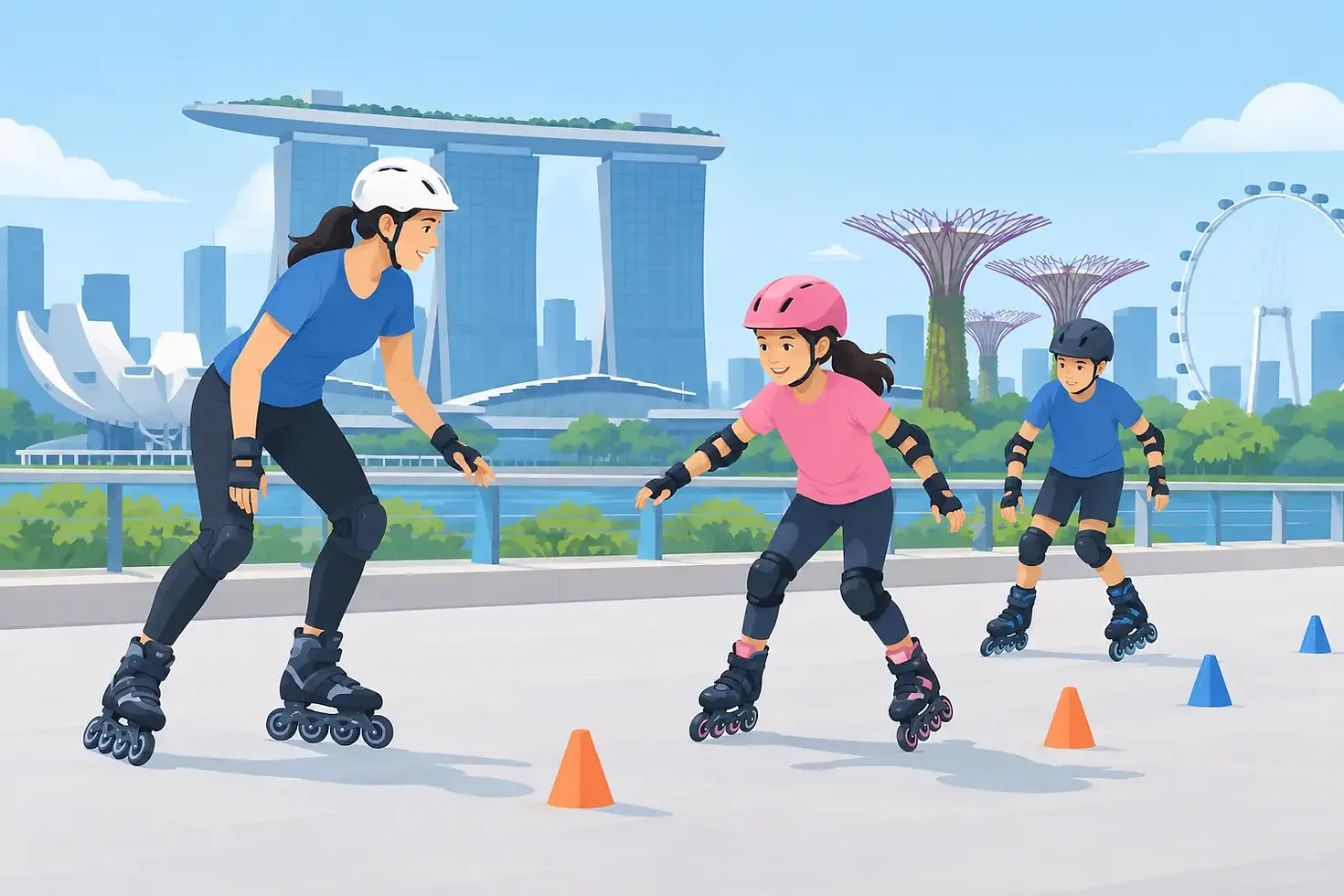
Singapore Skating Venues for Safe Learning

A smooth path can make a child feel brave enough to roll for the first time. A crowded, uneven, or slippery one can make that same first lesson feel far harder than it needs to be. Choosing the right Singapore skating venues is not only about finding an open space. It is about giving beginners enough room, predictable ground, and a calm setting where they can focus on balance, stopping, and safe falling.
For parents, the best venue supports close supervision and reduces unnecessary risks. For adult beginners, it creates the privacy and breathing room needed to practice without feeling rushed or self-conscious. The right location helps a skater make progress with confidence, one controlled movement at a time.
What Makes a Good Skating Venue?
A beginner-friendly skating area should have a flat, clean, dry surface with enough open space to move in a straight line. Smooth concrete or well-maintained pavement is usually more suitable than tiled walkways, rough asphalt, or paths with frequent drains and cracks. Small surface changes can catch wheels, especially when a learner is still developing balance.
Space matters just as much as surface quality. New skaters need room to practice basic positions, marching steps, gliding, turning, and stopping without weaving around pedestrians, cyclists, pets, or playground traffic. A large venue is not automatically better, though. A quiet, manageable section of a park can be more useful than a huge area filled with fast-moving users.
Shade, seating, and nearby restrooms are practical considerations for families. Singapore's heat can tire children quickly, and regular water breaks are part of responsible skating practice. If a venue has limited shade, schedule earlier in the morning or later in the afternoon, while still allowing enough daylight to see changes in the ground clearly.
Types of Singapore Skating Venues to Consider
Different locations suit different stages of learning. A complete beginner does not need ramps, jumps, or a busy skating crowd. They need stable ground and patient practice. As skills improve, more varied spaces can make training engaging and help skaters adapt their control to real outdoor conditions.
Open park spaces and neighborhood courts
Open paved areas in parks, community spaces, and multipurpose courts are often excellent for introductory lessons. They give learners a clear practice zone for foundational skills such as standing safely, moving forward, keeping knees bent, and using a controlled brake stop.
These spaces are particularly helpful for children who are shy or cautious. A small, familiar practice area feels less overwhelming than a large public promenade. Coaches can set simple games and movement drills that keep young skaters engaged while reinforcing posture, awareness, and control.
Before heading out, check whether the court is being used for another activity. A venue may be smooth and spacious on one day but busy with ball games, events, or gatherings on another. Sharing space respectfully is part of skating safely.
Park connectors and wide pathways
Park connectors can be enjoyable once a learner can glide, turn, and stop reliably. They offer a sense of movement and exploration that many children and adults love. They are also a useful place to develop endurance, pacing, and awareness of other path users.
However, they are not usually the best setting for a first session. Paths may have slopes, bends, cyclists, runners, and changing surface conditions. A child who cannot stop independently should not be asked to manage a long shared route. Start in a controlled area, then introduce pathways when basic control is consistent.
For family skating, choose a quieter stretch with good visibility. Teach children to keep left where required, look ahead, avoid sudden direction changes, and slow down well before reaching others. Skating confidence should never come at the expense of public safety.
Skate parks and dedicated skate areas
Dedicated skating facilities can be motivating for experienced skaters who want to observe stronger techniques and work on more advanced skills. Some feature smooth surfaces, bowls, ramps, rails, and banks designed for action sports.
For beginners, these features are usually a reason to be more cautious, not a reason to rush ahead. Ramps and crowded skate areas can create pressure to attempt skills before a skater has the stopping ability and body control to manage them safely. A flat perimeter or quiet section may be suitable for basic drills, but new learners should avoid ramps until they have built a solid foundation.
If your child is eager to try a skate park, frame it as a long-term goal. Learning to balance, fall safely, stop, and turn with control is what makes future park skating more enjoyable.
Covered spaces for uncertain weather
Singapore weather can change quickly. Covered areas can be useful when they are open, well-lit, dry, and approved for skating. Still, not every sheltered walkway or void deck is appropriate. Some have tiles that become slippery, narrow passages, low ceilings, or regular pedestrian traffic.
Never skate on wet surfaces. Even a light layer of rain can significantly reduce wheel grip and make stopping unpredictable. If rain begins, pause the session, move away from wet patches, and wait until the ground is fully dry. This is a simple decision that prevents many avoidable falls.
How to Check a Venue Before a Lesson
A quick five-minute walk-through can save a frustrating session. Look at the area from a beginner's perspective: Where will they start? Where can they safely stop? What might distract or obstruct them?
Use this practical check before skating:
Inspect for gravel, wet leaves, loose sand, cracks, drains, and uneven edges.
Watch the space for a few minutes to understand pedestrian and cyclist traffic.
Identify a flat zone with enough distance for gliding and controlled stopping.
Check for shade, drinking water, restrooms, and a comfortable place for parents to wait.
Confirm that skating is permitted and that there are no event bookings or access restrictions.
It is also wise to consider the time of day. A venue that works well on a weekday morning may be crowded after school or on weekends. For a first lesson, a quieter period often leads to better concentration and more practice time.
Safety Equipment Is Part of the Venue Choice
Even the best surface cannot replace proper protective gear. Every beginner should wear a fitted helmet, wrist guards, knee pads, and elbow pads. Wrist guards are especially valuable because a natural reaction during a fall is to put the hands out first.
Skates should fit snugly without painful pressure, and buckles or laces should be secured before entering the practice area. Loose skates reduce ankle support and make balance much more difficult. Parents should also ensure children wear comfortable clothing that allows free movement and socks that reduce rubbing.
Venue conditions and equipment work together. A smooth space helps a learner roll predictably, while protective gear gives them the confidence to practice safe falling techniques. When students know how to lower their center of gravity, protect their wrists, and get up safely, they are more willing to keep trying after a wobble.
Match the Venue to the Skater's Current Skill Level
The most useful question is not, “Where is the most exciting place to skate?” It is, “What does this skater need to practice next?” A first-time adult may need a quiet flat surface to work through fear of falling. A child who can already glide may need room for turning drills and stopping games. A more confident skater may be ready for longer pathways and gentle slopes under supervision.
Structured coaching helps make this progression clear. At Affinity Skates, lessons can be arranged at suitable customer-selected venues, allowing families to choose a practical location while keeping instruction focused on safety and measurable skills. A qualified coach can assess the space, adapt activities to the learner, and ensure that fun does not replace good technique.
There is no need to wait for a perfect destination before getting started. Choose a clean, open, beginner-friendly area, wear the right protection, and give each skater permission to learn at their own pace. A calm first roll in the right space can become the start of a lifelong healthy activity.


Comments