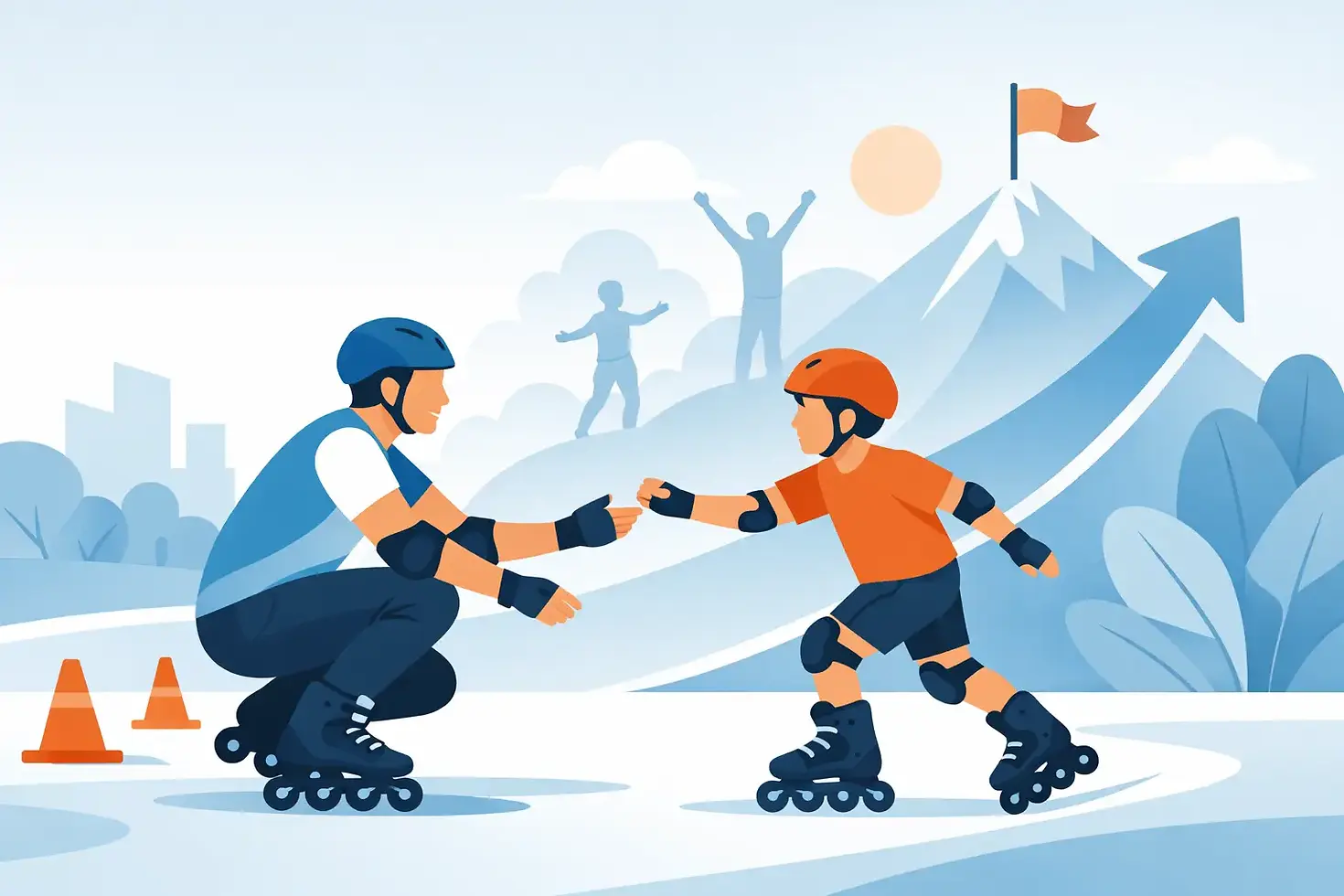
How Skating Instructors Build Lasting Confidence

A child holding tightly to the railing, or an adult taking their first careful roll, does not need to be pushed into speed. They need skating instructors who can make the next step feel safe, clear, and achievable. The right coaching turns early wobbles into control, then turns control into the confidence to enjoy skating independently.
Inline skating looks simple when someone is gliding smoothly across a park path. Learning it is more involved. Balance, posture, braking, turning, and falling safely all need to work together. Good instruction gives each skill a place in the learning process, so beginners are not left trying to figure everything out at once.
What Skating Instructors Actually Teach
A professional lesson is about much more than learning to move forward. A beginner first needs to understand how to stand in skates with knees bent, weight centered, and eyes looking ahead. This athletic position helps the body respond when the wheels begin to roll.
From there, a structured program introduces basic marching steps, controlled gliding, turning, stopping, and safe falling techniques. Each skill supports the next. A learner who knows how to stop is more willing to glide. A learner who understands how to fall and get up is less likely to panic when balance is lost.
Balance before speed
Many new skaters want to know how quickly they will be able to skate fast. For instructors, the better question is whether the learner can control their body at a slow pace. Speed without stopping ability can create fear, especially for children who are still developing coordination.
Patient coaching builds the foundations first. Instructors may use short balance drills, cones, follow-the-leader activities, or games that encourage children to bend their knees and shift their weight naturally. Adults may prefer clear explanations and repeated practice, but they benefit from the same progression. The pace can differ, while the fundamentals remain the same.
Safe falling is a real skill
Falling is part of learning to skate, but it should not be treated as something learners simply have to endure. A trained coach teaches skaters to lower their center of gravity, protect their wrists, use knee pads appropriately, and avoid reaching backward with stiff arms.
Practicing a controlled fall on a suitable surface removes much of the fear around it. Once a child or adult realizes they can fall, get up, and try again, their confidence often changes quickly. That resilience carries beyond skating too.
Why Qualified Skating Instructors Matter
Anyone can tell a beginner to keep practicing. Qualified instructors can observe why a learner is struggling and adjust the lesson accordingly. A child may be looking down at their feet, standing too straight, or placing too much weight on one skate. An adult may be tense because they are worried about falling. These are different challenges and need different coaching responses.
Certification also matters because it reflects a commitment to safe teaching standards and sound technique. At Affinity Skates, instructors hold ICPI international certification and teach through a progressive six-level curriculum. This gives families a visible path from first balance drills to stronger movement, control, and more advanced skating skills.
Experience matters alongside qualifications. An effective instructor knows when to demonstrate, when to give a learner space to repeat a drill, and when a small adjustment will make the skill click. They keep sessions encouraging without allowing learners to skip essential safety habits.
For parents, that combination offers reassurance. Your child is not simply being entertained on skates. They are building coordination, focus, listening skills, and the confidence that comes from improving through guided effort.
Choosing the Right Lesson Format
The best lesson format depends on the learner's age, confidence level, goals, and schedule. There is no single answer that suits every family.
A trial class is a practical first step for someone with zero experience or some uncertainty. It allows the learner to try the equipment, meet the coach, and experience the teaching style before committing to a longer program. For a nervous child, a positive first session can make all the difference.
Open group classes are a strong fit for children who enjoy learning alongside others. Small groups can make practice feel social and motivating, while a skilled coach still provides individual corrections. Games-based activities are especially useful for younger learners because they keep movement purposeful without making the session feel overly formal.
Private lessons may suit learners who need more focused attention, have specific goals, or prefer a quieter pace. They can also be helpful for siblings, families, or adults returning to skating after a long break. The trade-off is that private coaching is more personalized, while group classes provide the added motivation of peers.
Flexible venue options are useful in a busy city. When lessons can be arranged at a suitable nearby location, families may find it easier to make skating a regular habit rather than an occasional activity.
What a Good First Lesson Should Look Like
A well-run first class should not begin with learners racing around an open area. The coach should first check that skates fit properly and that protective gear is worn correctly. Beginners need enough space to practice, but the surface should also be smooth, dry, and free from avoidable hazards.
Before rolling, learners should understand the purpose of their protective equipment:
A helmet protects the head during unexpected falls.
Wrist guards support the hands and wrists, which beginners often put forward instinctively.
Knee pads provide a safer contact point during controlled falling practice.
Elbow pads add protection while learners build confidence and coordination.
After the safety check, the coach should explain a few simple cues rather than overwhelm the class with technical language. “Knees bent,” “look ahead,” and “small steps” are more useful to a first-time skater than a long lecture. Demonstration, practice, feedback, and repetition should make up most of the session.
For children, a good lesson also includes appropriate boundaries. They should know where to wait, when to move, and how to listen for instructions. Structure does not reduce the fun. It helps everyone feel secure enough to enjoy it.
Questions Parents and Adult Beginners Should Ask
Before choosing a skating school, ask how beginners are grouped and how instructors handle different confidence levels. A five-year-old who has never worn skates should not be expected to keep pace with a child who already glides independently. Likewise, an adult beginner should not feel embarrassed for needing extra time with balance or stopping.
Ask about instructor qualifications, class size, protective gear requirements, and the curriculum beyond the first session. A clear answer shows that the school has considered long-term learning, not just a one-time activity. It is also reasonable to ask how coaches teach safe falling and what happens when a learner becomes anxious.
Price matters, but it should be considered alongside instructor attention and program quality. Lessons beginning at S$25 per person per hour can make formal coaching accessible, yet the real value is a learning environment where progress is safe, measurable, and enjoyable.
Progress Looks Different for Every Skater
Some learners glide confidently within their first lesson. Others need several sessions before they feel comfortable releasing a parent’s hand or rolling more than a few feet. Neither pace defines their potential.
The goal is not to compare one skater with another. It is to build reliable habits: bend the knees, look where you want to go, control speed, stop with purpose, and recover calmly after a wobble. Those habits create a skater who can keep learning long after the first class.
A patient instructor can make that journey feel less intimidating for a cautious child, a busy parent, or an adult who believes they are “too old” to start. Begin with one safe, supported session, celebrate the small wins, and let confidence grow one controlled glide at a time.


Comments