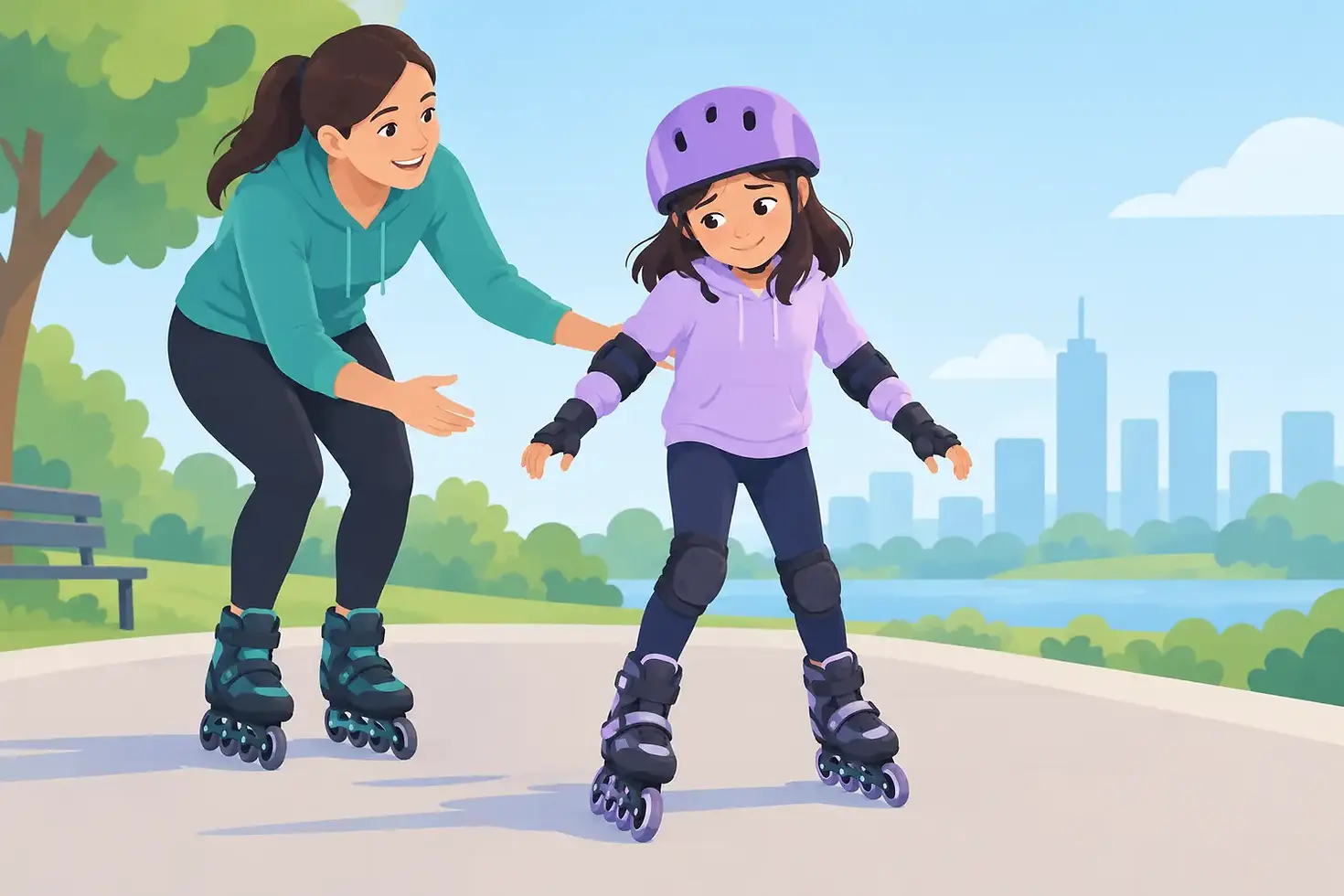
Can Shy Children Skate? Yes, With the Right Start

A child who hangs back at the playground may not rush to put on skates in front of a group. They may watch quietly, hold a parent's hand tightly, or say they want to try but freeze when it is time to stand up. Parents often ask, "can shy children skate?" The answer is yes. Shyness does not prevent a child from learning inline skating. In many cases, skating can become a meaningful way for a reserved child to build confidence at a pace that feels safe.
The key is not forcing a child to become outgoing. It is giving them a clear, patient learning environment where small wins matter. With the right coach, safety equipment, and structured progression, shy children can move from cautious first steps to proud, independent skating.
Why shy children can do well in skating
Shy children are often observant. Before joining an activity, they may spend time watching the coach, studying other children, and working out what is expected of them. In a well-run skating class, that can be a strength. They can see a movement demonstrated, understand the routine, and try it when they are ready.
Inline skating also gives children visible proof of progress. At first, success may simply mean standing on skates without grabbing a parent. Then it may be taking five controlled steps, rolling a short distance, or learning how to stop. These milestones are concrete. A child does not need to be loud or competitive to feel proud of achieving them.
Skating is an individual skill practiced alongside others. This makes it less socially demanding than activities that require a child to call for a ball, perform in front of a crowd, or speak constantly with teammates. Children still benefit from seeing peers learn, but their attention can remain on their own balance, posture, and control.
Can shy children skate in a group class?
Yes, provided the group is appropriately sized and the coach knows how to include quieter learners. A group class can help a shy child realize they are not the only beginner. Watching other children wobble, fall safely, laugh, and try again can reduce the pressure to be perfect.
However, group classes are not identical for every child. A child who is slow to warm up may benefit from a smaller class, where the instructor can check in regularly without placing them in the spotlight. Some children feel more comfortable beginning with a private lesson or trial class, then moving into a group after they understand the basics.
The goal is not to shelter a child from every challenge. It is to give them a manageable first experience. If the first session is too crowded, too fast, or too focused on games before the child feels stable, they may associate skating with embarrassment rather than enjoyment. The best setting offers encouragement while keeping expectations clear and realistic.
What patient coaching looks like
Patient coaching is more than saying, "Take your time." A skilled instructor gives shy children simple, specific instructions and allows enough time to process them. Instead of asking a nervous child to skate across a large area immediately, the coach may begin with a stable standing position, safe falling practice, and a few controlled marching steps.
A good coach also avoids drawing unwanted attention to a child's hesitation. Quiet praise works well: "Your knees are bent nicely," or "You stood up by yourself. That is progress." This recognizes effort without making the child feel they are performing for everyone.
At Affinity Skates, structured lessons are designed to build one skill on top of another. That approach is particularly helpful for children who feel uncertain in unfamiliar activities. They know what comes first, what they are practicing now, and what they will work toward next.
Start with safety, because safety creates confidence
For a shy beginner, fear of falling is often bigger than fear of skating itself. The child may worry about pain, looking silly, or not knowing what to do if they lose balance. Proper protective gear and early falling instruction can change that feeling.
A beginner should wear a properly fitted helmet, wrist guards, elbow pads, knee pads, and secure inline skates. Equipment should fit snugly without restricting movement. Loose skates make balancing harder, while poorly fitted pads can slip when a child needs them most.
Before long rolling exercises, children should learn how to get low, bend their knees, and fall onto their protective pads safely. They should also practice getting back up. Knowing they have a plan for a wobble or fall gives a nervous child a sense of control. That confidence often carries into the rest of the lesson.
Parents can help by treating falls calmly. A small fall is not a failure or a reason to end the activity. If the child is unhurt, a reassuring response such as, "You used your pads and got back up," teaches resilience. Of course, a child in pain, unusually distressed, or showing signs of injury should stop and be assessed immediately.
How parents can support without adding pressure
Parents have a powerful effect on a shy child's first skating experience. Encouragement helps, but too much coaching from the sidelines can feel like another audience. Let the instructor lead the technical guidance and keep your own support calm and simple.
Avoid promises such as, "You will be skating fast by the end of class," or comparisons with siblings and friends. A shy child may hear these as expectations they could fail to meet. Instead, focus on participation: putting on the gear, listening to the coach, standing up once more, or trying one new movement.
It also helps to prepare your child before the lesson. Explain where they are going, what they will wear, and what the first few minutes may look like. Tell them it is normal to hold a coach's hand, take breaks, or need more than one lesson to feel comfortable. Predictability lowers anxiety.
If possible, arrive a little early. Rushing into an unfamiliar space can make a reserved child retreat further. A few quiet minutes to look around, adjust equipment, and meet the instructor can make the transition much easier.
A realistic progression for a reserved beginner
Confidence should be built through steady practice, not rushed by pushing for speed. In the first lesson, a shy child may only be ready to stand, balance, learn safe posture, and take a few steps. That is a successful start.
Over the next sessions, they can work on controlled rolling, turning, stopping, and navigating simple obstacles. Games can be useful when they support a skill objective, such as practicing balance, stopping at a marker, or following a safe path. The game should invite participation rather than reward only the fastest child.
Progress is rarely perfectly smooth. Some children become more confident in the second class, then feel cautious again when a new skill is introduced. This is normal. Consistent instruction, familiar routines, and achievable tasks help them regain momentum.
Signs your child is ready to continue
A shy child does not need to become chatty or fearless to show that skating is working for them. Look for quieter signs: they put on their gear with less hesitation, ask a question about the next lesson, practice a stance at home, or recover more calmly after a wobble.
They may begin by staying close to the instructor, then gradually skate a little farther away. They may initially watch every demonstration, then volunteer to try first during a simple exercise. These changes show growing trust in both their own body and the learning process.
If your child consistently becomes overwhelmed, refuses to participate after several gentle attempts, or appears frightened rather than merely cautious, consider adjusting the format. A private lesson, shorter practice period, or smaller class may be a better fit. There is no prize for progressing before a child is ready.
Give confidence room to grow
Skating gives shy children more than an outdoor activity away from screens. It gives them repeated opportunities to face a small challenge, use a safety skill, and discover, "I can do this." The child who begins by holding a hand may eventually glide across the practice area with a smile, not because they were pushed to be different, but because they were patiently taught to trust themselves.
A trial lesson can be a gentle first step. Choose a safety-focused class with certified coaching, clear beginner instruction, and enough individual attention for your child to settle in. Give them permission to start quietly. Confidence has its own pace, and it often begins with one careful roll.


Comments