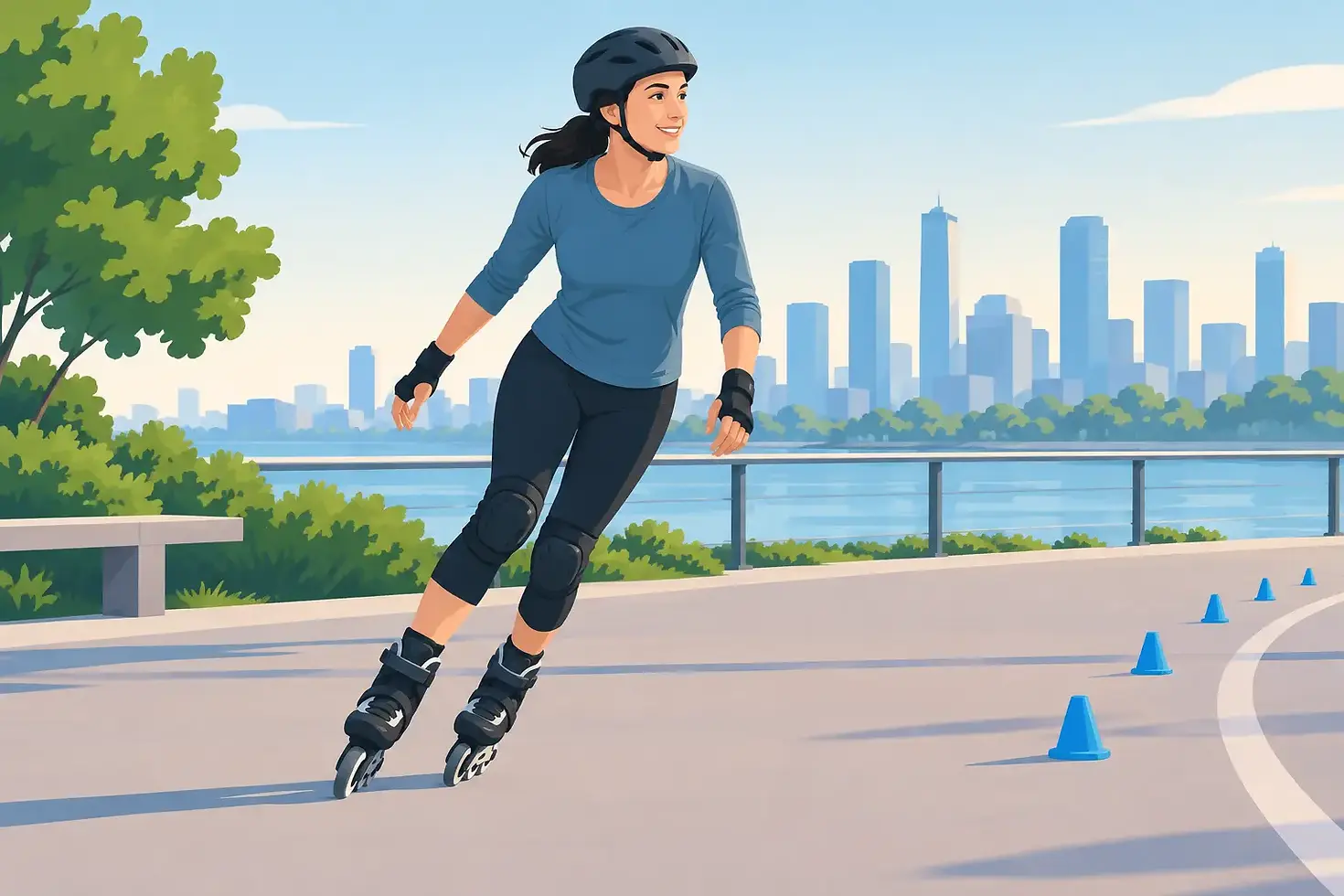
Can Adults Learn Skating? Yes, With a Plan

A first skating lesson can feel surprisingly vulnerable. Children often step onto skates, wobble, laugh, and try again. Adults tend to notice every wobble and wonder whether they are too stiff, too cautious, or simply too late to start. But can adults learn skating? Absolutely. Adults can become safe, confident inline skaters when they learn in the right order, with proper protection, patient coaching, and realistic expectations.
The goal is not to copy an experienced skater on day one. It is to build control: standing securely, moving deliberately, stopping safely, and knowing how to recover when balance shifts. Those skills are learnable at any age.
Can Adults Learn Skating Without Any Experience?
Yes. You do not need childhood skating experience, exceptional fitness, or natural balance to begin. You only need a willingness to practice basic movements repeatedly. In fact, many adult beginners progress well because they listen carefully, understand instructions, and recognize why safety habits matter.
What adults often need most is permission to start slowly. Inline skating asks your body to balance on narrow wheels while moving forward. That can feel unfamiliar at first, especially if you spend much of your day sitting at a desk, driving, or walking only on stable surfaces. Initial stiffness is normal. It is not proof that you cannot skate.
A structured lesson removes much of the guesswork. Instead of trying to stay upright by instinct, a beginner learns a stable stance, knee bend, weight placement, safe falling, and controlled stopping. Each skill supports the next one.
Why Adults Often Feel More Nervous Than Children
Adults have more awareness of consequences. A child may see a smooth path and want to race ahead. An adult may see hard ground, traffic, other park users, and the possibility of falling. That caution is sensible, but it can become a barrier when it causes the body to lock up.
Straight legs and tense shoulders make balancing harder. Skating requires soft knees, a slightly forward body position, and the confidence to shift weight from one foot to the other. When beginners are afraid of falling, they may lean too far back. This is one of the most common habits coaches help correct early.
The answer is not to ignore fear. It is to reduce risk through preparation. A well-fitted helmet, wrist guards, knee pads, and elbow pads give beginners more confidence to practice. Learning how to fall safely also changes the experience. Rather than treating every loss of balance as a failure, skaters learn how to lower themselves, protect their wrists, and get up calmly.
The First Skills Adults Should Learn
A beginner does not need complicated drills. The foundations matter far more than speed or tricks. A good first lesson focuses on posture, balance, movement, stopping, and recovery.
Start with the ready position: feet about shoulder-width apart, knees gently bent, chest slightly forward, and arms relaxed in front. This lower stance creates stability and helps keep your center of gravity over the skates.
Next comes marching. Instead of trying to glide immediately, beginners take small controlled steps on skates. Marching develops comfort with rolling wheels and introduces weight transfer without asking the body to do too much at once. From there, short glides become less intimidating.
Stopping should be introduced early, not saved for later. Depending on the learner's level and skate setup, an instructor may teach a heel-brake stop, a plow stop, or another controlled technique. The best stopping method depends on the skater, the equipment, and the environment. What matters is that beginners can slow down before they build speed.
Getting up from the ground is equally practical. New skaters feel more secure once they know that a fall does not end the session. They can reset, stand up with control, and continue learning.
How Long Does It Take to Feel Confident?
It depends on your starting point, how often you practice, and what you mean by confident. Most adults can make meaningful progress within a few lessons. They may move from needing support to standing independently, gliding short distances, turning gradually, and stopping with more control.
Feeling fully comfortable outdoors takes longer. Uneven paths, gentle slopes, crowds, and changing surfaces require judgment as well as technique. There is no benefit in rushing this stage. A skater who builds sound habits early is usually safer and more relaxed later.
For many learners, one lesson per week combined with short, focused practice sessions is a sensible rhythm. Twenty minutes of careful practice can be more useful than an hour spent repeating poor posture or skating while exhausted. Consistency builds confidence better than occasional intense sessions.
Can Adults Learn Skating if They Are Not Fit?
Yes, though it is wise to begin at an appropriate pace. Inline skating can improve leg strength, balance, coordination, and cardiovascular fitness, but beginners should not treat their first session like a fitness test. Learn the movement first. Fitness improves as your control and skating time increase.
If you have an injury, recurring joint pain, a medical condition, or concerns about returning to exercise, speak with a qualified health professional before starting. During class, let the coach know about relevant limitations. A good instructor can adjust drills, rest periods, and practice distance so you can learn safely.
Adults with a history of ankle weakness or knee discomfort may benefit especially from professional guidance. Equipment fit, posture, and technique can affect how skating feels on the body. Pushing through sharp pain is never part of productive practice.
Choosing the Right Environment and Equipment
Your first few sessions should happen on a smooth, open, dry surface away from traffic and heavy pedestrian flow. A quiet basketball court or suitable sheltered space is often easier for learning than a busy park path. Flat ground gives you room to focus on your stance and stopping technique without extra pressure.
Inline skates should fit snugly without painful pressure points. Oversized skates make it harder to control the feet, while overly tight skates can create numbness and discomfort. Wear socks you would normally use for exercise, and fasten the skates securely before standing.
Protective gear is not optional for beginner adults. Wear a certified helmet, wrist guards, knee pads, and elbow pads every time you practice. Wrist guards are particularly valuable because beginners often instinctively reach toward the ground. Learning safer falling techniques helps, but protection remains essential.
Why Coaching Helps Adults Progress Faster
Video tutorials can introduce skating ideas, but they cannot see whether your knees are locked, your weight is leaning backward, or your stopping method is unsafe for your current speed. A coach can spot small errors before they become habits.
For adults, the best instruction is clear and progressive. You should understand what you are practicing, why it matters, and what to focus on next. Small-group and private lessons also provide the repetition and individual feedback that many first-time skaters need.
At Affinity Skates, adult learners follow a structured progression designed to move from basic balance to controlled movement at a manageable pace. Certified coaching, safety-led instruction, and patient feedback help beginners replace uncertainty with practical skills. Lessons can begin with simple goals: stand independently, glide calmly, stop safely, and leave feeling more capable than when you arrived.
A Better Mindset for Adult Beginners
Do not compare your first hour on skates with someone else's fifth year. Skating is a physical skill, and physical skills are built through repetition. A shaky start is not embarrassing. It is the normal beginning of learning something new.
Measure progress in small wins. Perhaps you stood without holding a rail. Perhaps you rolled five meters with bent knees. Perhaps you stopped before reaching the edge of the court. These are not minor achievements. They are the building blocks of independent skating.
Give yourself enough time to learn safely, celebrate steady improvement, and keep showing up. The first confident glide often arrives quietly, but it can change the way you see what your body is capable of.


Comments