Are Skating Lessons Worthwhile for Beginners?

A child may be eager to roll the moment they put on skates, then freeze when the wheels start moving. An adult may feel the opposite: interested in skating but worried about falling in front of others. In both cases, the question is the same: are skating lessons worthwhile when videos, friends, and a nearby path might seem like enough?
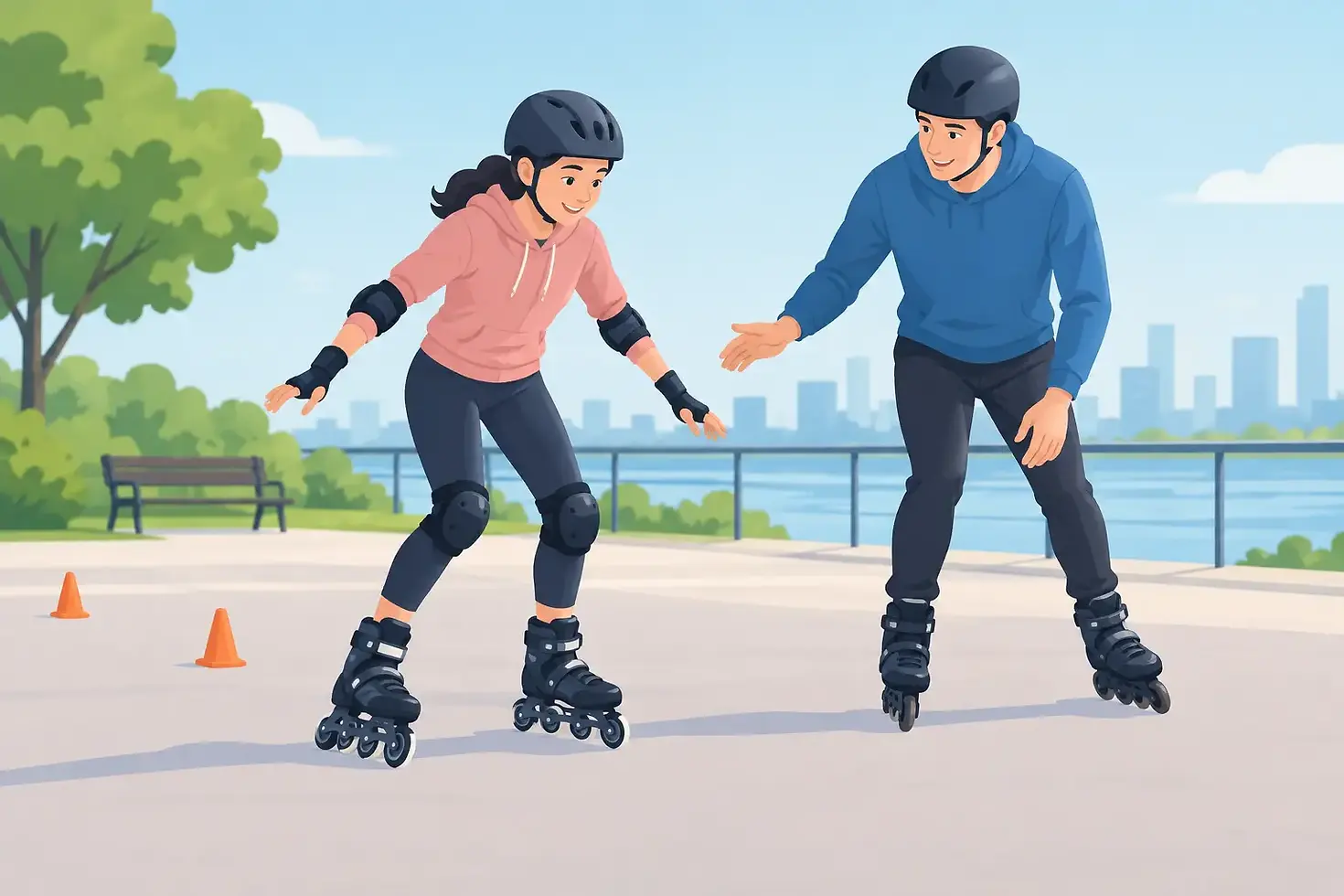
For most beginners, yes. A good lesson does more than show someone how to move forward. It creates a safe, structured way to learn balance, stopping, turning, and falling techniques before bad habits or a painful fall make skating feel intimidating. The value is especially clear for children who need attentive supervision and for adults who want to build confidence without guessing their way through every session.
Are skating lessons worthwhile for your goals?
Skating lessons are worthwhile when the goal is more than simply standing on skates for a few minutes. They help learners develop control that lasts: the ability to start smoothly, manage speed, stop with purpose, turn around obstacles, and skate safely in a shared outdoor space.
That matters because inline skating is not only about courage. It is a coordination skill. A beginner must learn to keep knees bent, place weight correctly, look ahead instead of down, and react calmly when balance shifts. These actions may look simple from the sidelines, but learning them in the right order makes a major difference.
For parents, lessons can turn screen-free activity into a regular skill-building routine. Children gain leg strength, balance, body awareness, focus, and resilience. They also learn that progress comes from practice. A child who cannot glide independently in the first lesson may be skating several meters with control after patient, guided repetition.
For adults, coaching removes much of the uncertainty. Rather than trying random techniques from online clips, they can receive direct feedback on posture, stride, braking, and safe recovery from a fall. That usually makes the early learning period less frustrating and more enjoyable.
What lessons provide that casual practice may not
Practice is essential, but practice works best after a learner understands what to practice. A structured instructor watches details that beginners often miss, such as straightening the knees too soon, leaning backward, gripping with tense shoulders, or looking at the ground. Small corrections early can prevent a lot of repeated struggle later.
A well-planned program also gives each skill a purpose. Learners do not jump straight from standing still to attempting fast skating. They begin with protective gear checks, skating posture, safe falling, and getting up. From there, they move into marching steps, gliding, basic stopping, turning, and more controlled movement.
This progression is valuable because confidence should be built on ability, not bravado. Children often want to go quickly before they can stop. Adults may hold back so much that they never develop a natural glide. A coach helps each learner find the appropriate next challenge.
At Affinity Skates, a progressive six-level curriculum gives learners a visible path from beginner balance to stronger technical control. That structure can be motivating for children who enjoy working toward the next milestone and reassuring for adults who want to know what comes after the first lesson.
Safety is a learned skill
Protective equipment matters, but gear alone does not make a person safe. A helmet, wrist guards, knee pads, and elbow pads reduce the consequences of a fall. Coaching helps reduce the likelihood of preventable falls by teaching posture, awareness, and control.
One of the most useful early lessons is how to fall safely. Beginners are often told to avoid falling, which can make them stiff and anxious. A better approach is to teach them how to lower their center of gravity, use protective pads correctly, and recover calmly. When a learner knows what to do if balance is lost, they are more willing to try.
Certified instructors also know how to manage the pace of a class. They can identify when a learner is ready to progress and when they need more repetition. This is particularly important in small-group settings, where children can enjoy games and social encouragement without being pushed beyond their ability.
When lessons may not be necessary
Lessons are not the only route to becoming a capable skater. Someone with strong balance from a related activity, a patient and experienced skating friend, and access to a safe practice area may learn basic movement independently. A confident recreational skater may also only need occasional coaching to improve a specific skill.
However, self-teaching has trade-offs. Progress can be slower when nobody can explain why a turn feels unstable or why a stop is not working. Beginners may also avoid practicing the skills that feel uncomfortable, even when those skills are the ones that make skating safer.
For young children, independent learning can be difficult to supervise. A parent may be willing and present but may not know how to teach a safe stance or correct a child who is leaning too far back. A lesson provides both instruction for the child and peace of mind for the parent.
The right question is not whether every person needs years of coaching. It is whether a few well-taught sessions would help them start more safely, enjoy the activity sooner, and build a stronger foundation. For many beginners, the answer is yes.
How many skating lessons are enough?
There is no single number because learners progress at different speeds. Age, confidence, coordination, frequency of practice, and previous sports experience all play a role. A child who practices between lessons may progress quickly, while an adult returning after a long break may prefer more time to build comfort.
A trial class is often the best first step. It allows the learner to experience the skates, meet the coach, and see whether the teaching style feels supportive. From there, a beginner can decide whether private lessons, open group classes, or a family session fits their needs.
Private coaching can be helpful for learners who are nervous, have a specific goal, or want focused feedback. Group classes can be motivating for children who enjoy learning alongside others. Family lessons give parents and children a chance to share an active hobby while learning the same safety principles.
Rather than rushing to complete a fixed number of lessons, look for clear signs of readiness. A beginner should be able to stand and glide with composure, stop at a manageable speed, turn with reasonable control, and understand how to respond when they lose balance. These skills make independent practice far more productive.
Choosing a lesson that is worth the investment
Not all skating lessons deliver the same experience. Before enrolling, parents and adult learners should look beyond the class duration alone. The quality of instruction, class size, curriculum, and safety practices all affect the value of the lesson.
A worthwhile program should have instructors who are trained to teach beginners, not simply skilled skaters themselves. Teaching requires patience, observation, and the ability to adapt explanations to different ages and confidence levels. Internationally certified coaches bring an added level of professional accountability to safety and technique.
It is also reasonable to ask how lessons progress. A school should be able to explain what beginners will learn first, how skills are assessed, and how learners advance. Clear pricing and flexible arrangements matter too, especially for busy families. In Singapore, lessons that begin at S$25 per person per hour can make formal instruction more accessible without treating it as a one-size-fits-all activity.
The setting should support learning as well. Beginners benefit from a suitable, open space with room to practice basic movements safely. Flexible venue options can make it easier for families to choose a familiar location and maintain regular practice.
The return is confidence, not just technique
The strongest reason to take skating lessons is not that every learner will become an advanced skater. It is that they can feel capable outdoors, take on a new physical challenge, and learn how to recover when something does not go perfectly.
For a shy child, the first independent glide can be a proud moment. For an adult, stopping smoothly after weeks of hesitation can make skating feel possible at last. Those moments come from consistent practice, but thoughtful coaching helps create them sooner and with less fear.
If skating has been sitting on the family’s “maybe someday” list, a beginner trial lesson is a practical place to start. Put on the right protective gear, allow room for mistakes, and let steady instruction turn those first uncertain steps into genuine confidence.


Comments